Makers Club
Made to Build. Built to Grow.
Each week, Makers Club brings children (and families) into a space where ideas are tested, materials are explored, and creations come to life.
Makers Club is rooted in project-based learning—where children move beyond quick builds and into a full process. They learn how to take an idea, work through it, adjust when things don’t go as planned, and follow a project all the way through to completion.
We offer two stream of experience.
Morning Makers:
The co-creators experience.
Parents and children work side by side—learning skills together, exploring materials, and building through guided co-creation. It’s a chance to slow down, be present, and step into the process alongside your child.
Full Day Makers
This is a drop-off program designed for independence and growth.
Children move through a full day of building, problem-solving, and creating—supported by educators who guide without taking over. Here, kids take ownership of their ideas and learn what they are capable of through doing.
Across both streams, the focus remains the same:
working with real materials, developing practical skills, and building confidence through hands-on experience.
Over time, children begin to approach challenges differently. They take more risks, stick with things longer, and trust their ability to figure things out.
Because in Makers Club, the goal isn’t just what they build—it’s who they become in the process.
Our Approach
Makers Club is built on a project-based approach—where learning happens through doing, adjusting, and following ideas all the way through.
We focus on the process, not just the outcome. Children are given the time to work through an idea from start to finish—planning, testing, revising, and building again. This creates space for real problem-solving, not quick fixes or step-by-step instruction.
Educators guide the process without taking it over. They introduce tools, model techniques, and support next steps, while leaving room for children to make decisions, work through challenges, and take ownership of their projects.
Materials are intentionally open-ended. They invite experimentation, require adaptation, and respond differently depending on how they are used. This keeps the process dynamic and pushes children to think, adjust, and try again.
Progress is not always linear—and that’s the point.
Children learn perseverance , to work through frustration, and to experience what it means to complete something that once felt uncertain.
Over time, this approach builds independence, persistence, and the confidence that comes from knowing, “I can figure this out.”
Choose Your Path
Morning Makers (Parent + Child)
A shared making experience.
Morning Makers is designed for parents and children to create side by side.
Together, you’ll be introduced to materials, tools, and project invitations—working through the process as a team. Educators guide the experience, offering support and ideas, while leaving space for connection, creativity, and co-creation.
This stream is about slowing down, learning together, and stepping into the making process as a shared experience.
Who is Makers Morning for?
Families who want to be hands-on, and part of the process.
Home learnings looking for a group activity
Parents who want to learn skills along with their children
Schedule: Mondays | 9:00 am – 12:00 pm
Location: 2529 Freeman Rd, Sydenham
Format: Parent and Child(ren)
Seasonal Program: Currently accepting registrations for Fall 2026
Session Dates: September 28 - December 7, 2026
Full Day Makers (Drop-Off Program)
Independent building and deeper project work
Full Day Makers is a drop-off experience designed for children ready to take ownership of their ideas. Children move through a half day of project-based work—exploring materials, building skills, and working through projects over time. Educators guide and support, but the process is driven by the child. This allows for deeper focus, problem-solving, and the kind of persistence that comes from seeing a project through.
After a morning of making, the afternoon opens into child-led play across the fields, forest, and farm.
Best suited for:
Kids ready for independence, challenge, and sustained creative work. Including Community Schooled and Home Learners.
Kids who are motivated to participate and ready to engage in the learning process.
Schedule: Mondays | 8:30 am – 4:00 pm
Location: 2529 Freeman Rd, Sydenham
Format: Drop-off Program
Seasonal Program: Currently accepting registrations for Fall 2026
Session Dates: September 28 - December 7, 2026
While both streams run at the same time, they are designed as separate experiences, each with its own educators and program flow.
Project Block 1 : Weeks 1–4
The group is introduced to materials, tools, and core skills as they begin their first project.
They move through the full MAKE™ process—exploring ideas, building foundational skills, and working step-by-step to bring a project to life.
This block focuses on learning the process and gaining confidence in how to begin.
Makers Club Layout
Fall Session: September 28 - December 7, 2026
No program on Thanksgiving Monday
Project Block 2: Weeks 5–8
With experience behind them, children step into a second project with more independence.
They take greater ownership of their ideas, work through challenges with more confidence, and begin to refine how they plan and build.
This block allows for deeper focus, stronger skills, and more complex creations.
Holiday Workshop: Weeks 9–10
The final weeks shift into a series of holiday workshops.
Children take on smaller, seasonal projects—designing and building ornaments, gifts, and meaningful handmade pieces connected to the time of year. These sessions are lighter and creative, offering space to enjoy the process while still building skills.
MAKE ™ Framework
How a project comes to life.
The MAKE ™ framework— 4 week progression guiding how children move from idea to finished project.
MAKE represents the process of building something real, while growing the skills and mindset to carry it through.
M — Meet the Materials
Curiosity · Exploration · Possibility
Children are introduced to materials, tools, and project invitations.
They explore how things work, what materials can do, and begin forming ideas. This stage is about testing, observing, and asking, “What could I make with this?”
A — Acquire the Skills
Learning · Practice · Foundations
Children learn and practice the core skills needed for their projects.
This might include tool use, construction techniques, design thinking, or material handling. Skills are introduced with guidance and practiced through doing.
K — Kickstart the Build
Action · Momentum · Problem-Solving
This is where ideas move into action. Children begin bringing their projects to life—testing their plans, working with materials, and figuring out what works (and what doesn’t). Early attempts may shift, change, or even fall apart—and that’s part of the process.
E — Elevate the Project
Refinement · Detail · Ownership
Projects are strengthened, refined, and brought to completion.
Children make improvements, add detail, and take ownership of their work—experiencing what it feels like to fully carry something through.

Built Through The Build
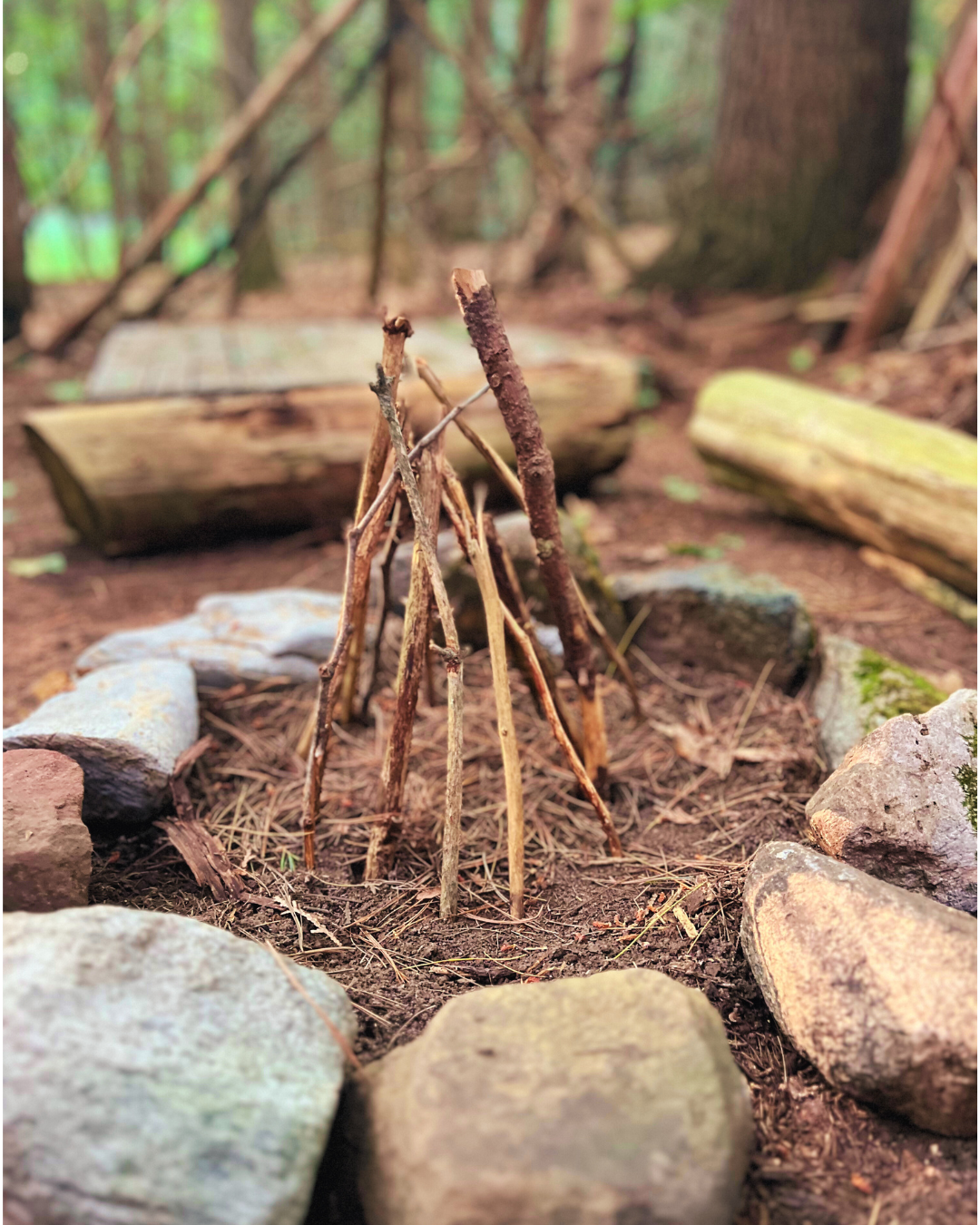
Children are given the time and space to work through their ideas—testing, adjusting, and building again. Not every step is smooth, and not every attempt works the first time. That’s where the learning happens.
Instead of stepping in to fix or fast-track, educators support children in thinking through challenges, making decisions, and finding their own way forward.
Over time, children begin to approach their work differently. They stay with things longer, take greater ownership, and develop confidence in their ability to figure things out.
Because the goal isn’t just to complete a project—
it’s to understand how to move through the process of creating.
What MAKE™ Does
The MAKE framework gives structure to the making process while leaving room for creativity and independence.
It helps children understand how to move from an idea to a finished project—step by step—without rushing or skipping the hard parts. Instead of jumping from one activity to the next, children learn how to stay with their work, adjust when needed, and keep moving forward.
This structure supports real problem-solving. Children begin to recognize where they are in the process, what their next step is, and how to work through challenges as they arise.
Register Today
Registration Opens April 1, 2026 for September 2026 programming. All sign ups will be placed onto our waitlist. Registrants will be notified by June 1,2026 about acceptance into programs.